
Alpinforum 2025
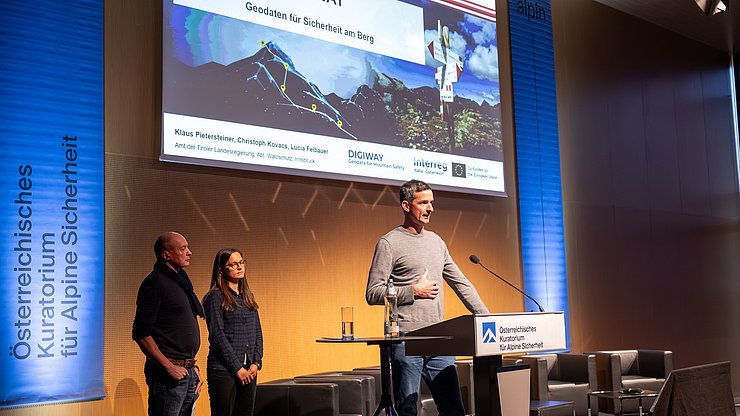
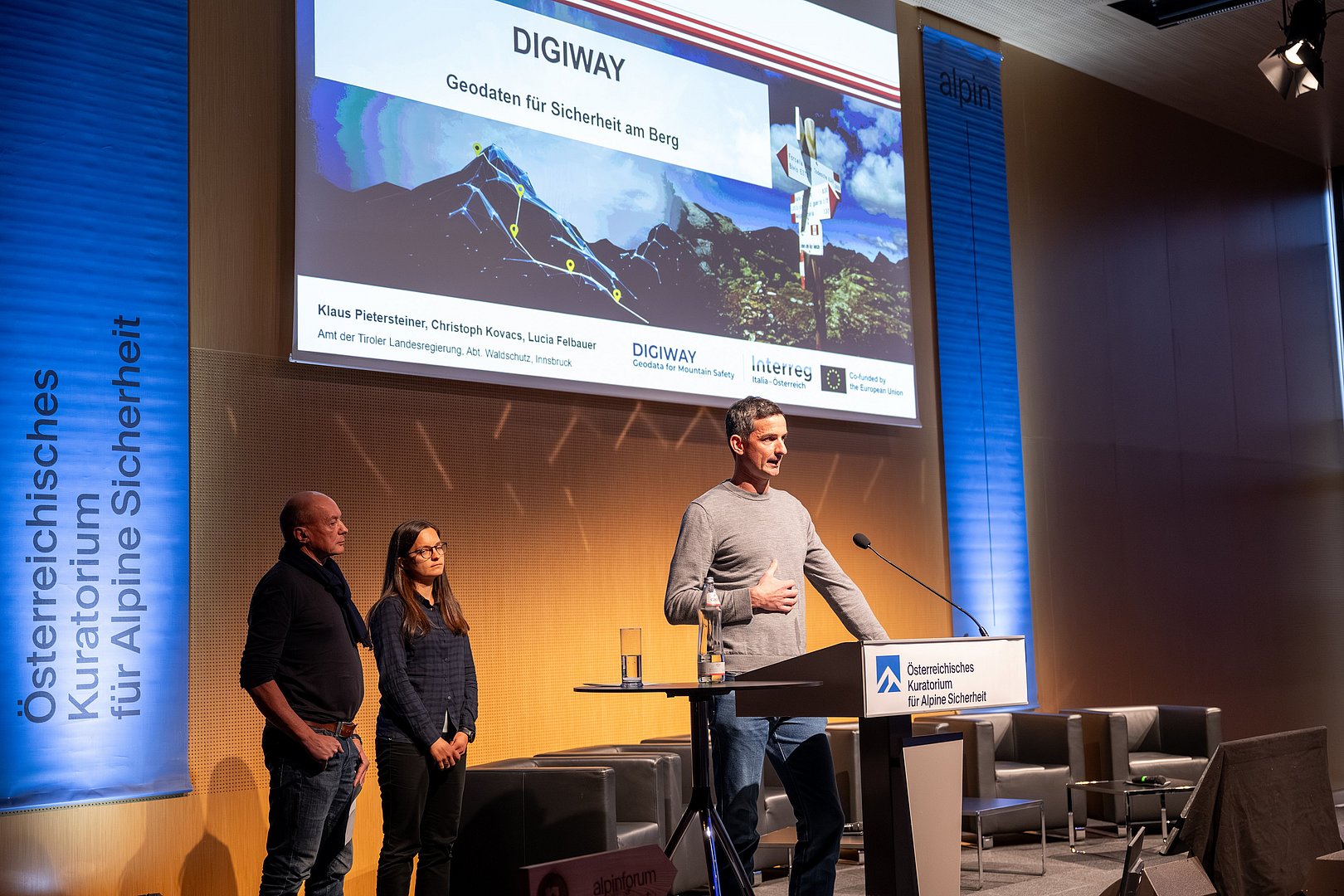
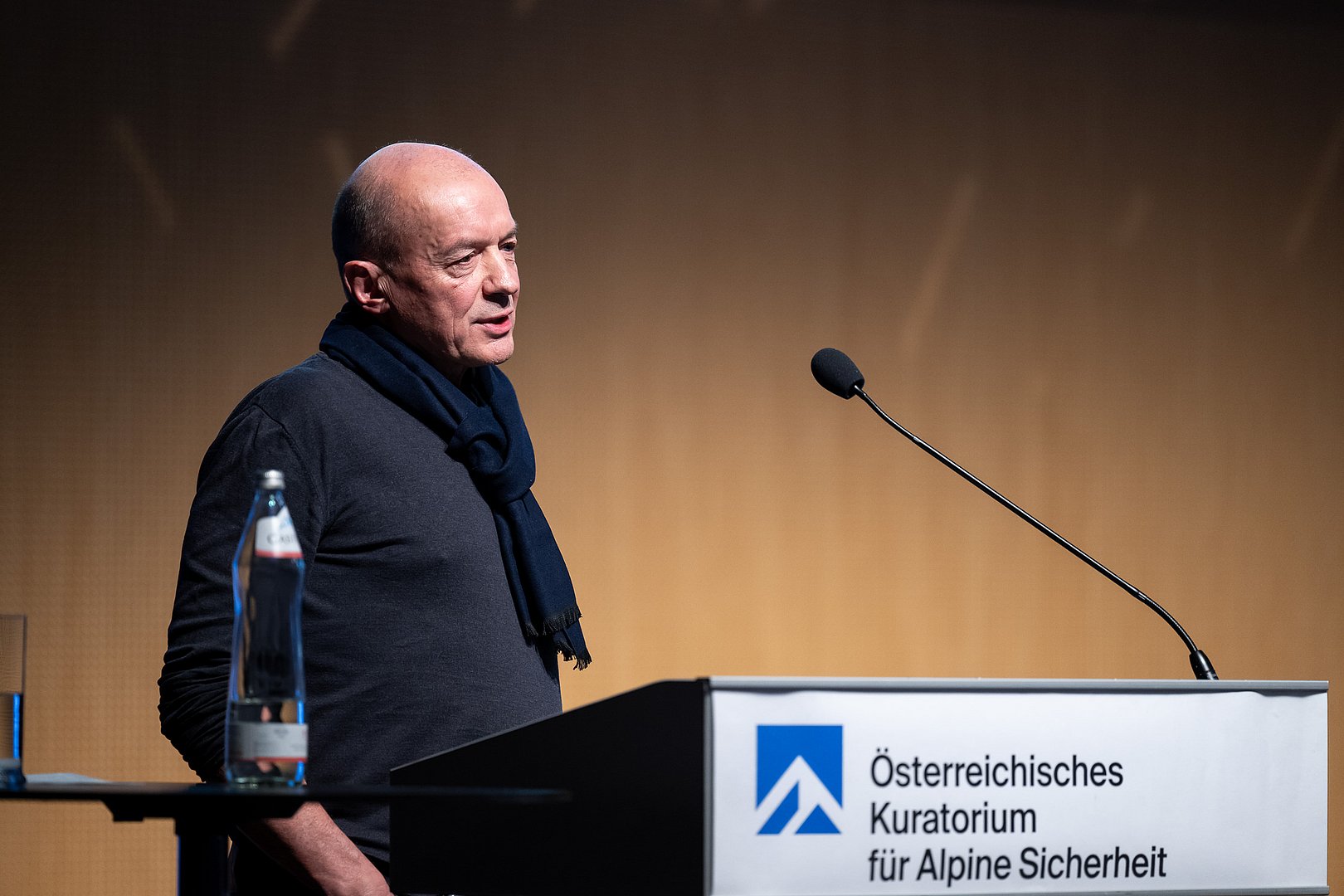
At the Alpinforum 2025, the DIGIWAY project was presented to a professional audience from the fields of mountain sports, alpine safety and digitalisation. A key milestone: the exposure map was presented to a broader public for the first time.
DIGIWAY and the Exposure Map
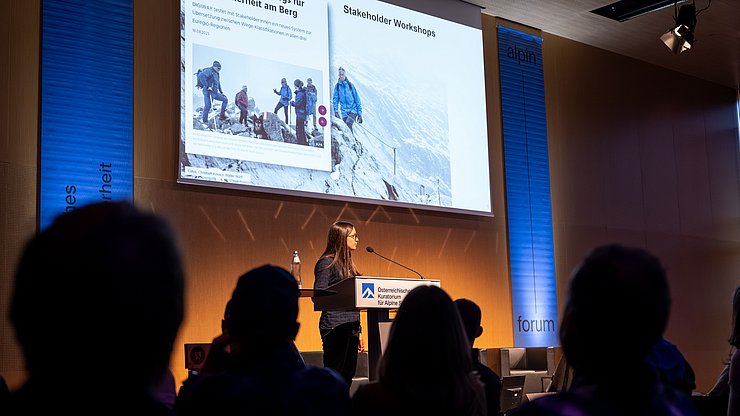
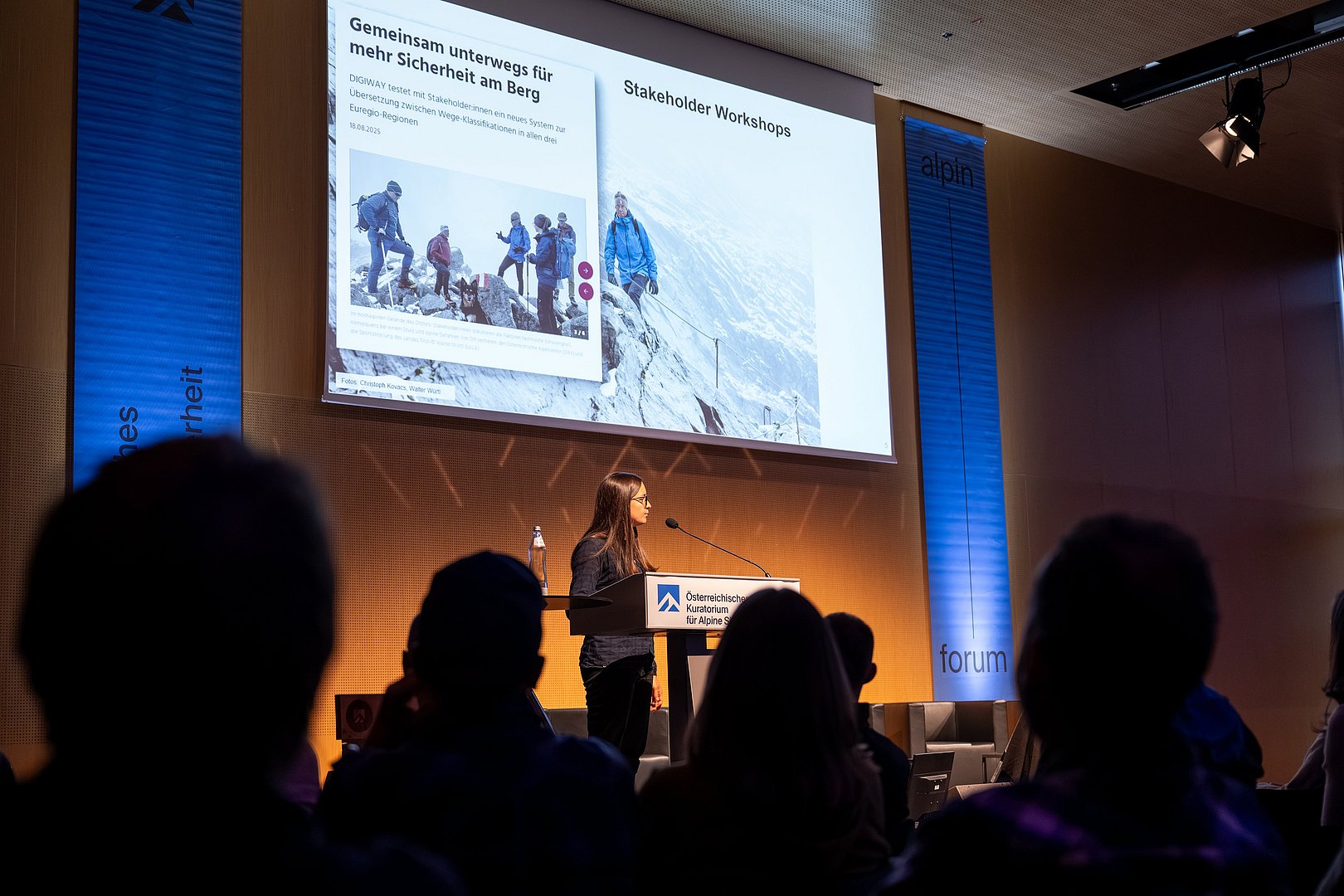
From the Tyrolean project team, Lucia Felbauer, Klaus Pietersteiner and Christoph Kovacs presented key results and developments of the DIGIWAY project. A major milestone was the first presentation of the exposure map to a broader public audience. The map had previously been evaluated in the field together with involved stakeholders and assessed in terms of its explanatory power. The results show a high level of agreement with real-world conditions and underline the practical value of the map.
The exposure map makes visible the potential consequences of a fall along hiking and mountain trails. It therefore complements existing information on trail difficulty with a key additional aspect and enables a more informed assessment already during tour planning.
Furthermore, it became clear that the map offers a wide range of possible applications: it can serve as a tool for accident prevention, support tour planning, and provide a basis for the maintenance and prioritisation of infrastructure measures. During the Alpinforum, it was also emphasised that the concept can be further developed and adopted by other institutions. The current dataset covers the Euregio Tyrol – South Tyrol – Trentino and can be integrated into various applications and platforms via an interface.
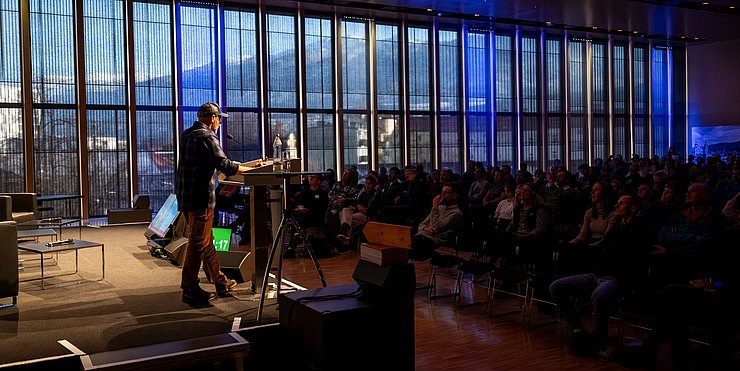
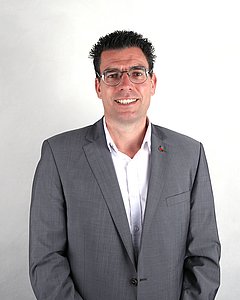
Walter Würtl highlights similarities and differences between trail classifications and presents an approach for clearly separating key assessment criteria. © Chris Riefenberg, chrisriefenberg.com / ÖKAS
Trail classification and risk communication
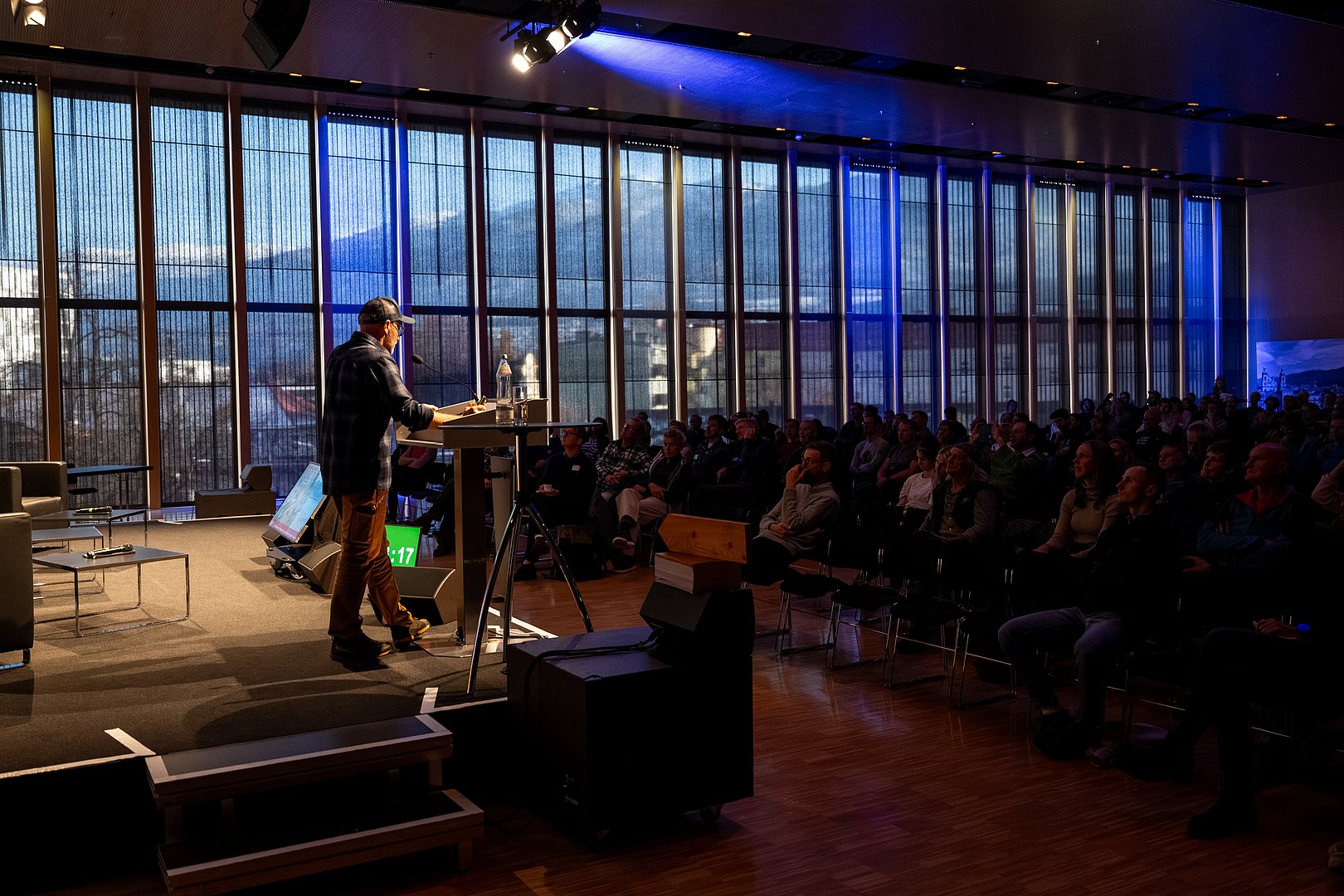
Another presentation within the DIGIWAY project addressed the question of how trail classifications can be communicated in a more understandable and comparable way. Walter Würtl highlighted key challenges in the current classification of hiking and mountain trails and presented new approaches developed within the DIGIWAY project.
The starting point is the observation that the large number of different classification systems in the Alpine region often leads to confusion. Different terms, colours and criteria make it difficult to realistically assess the requirements of a trail. At the same time, it became evident that many accidents are also “trail-related” and closely linked to the difficulty and exposure of a route. A key approach is therefore the clear separation of technical difficulty and the consequences of a fall. A technically easy trail can be highly exposed and, in the event of a fall, have severe consequences. Conversely, technically demanding trails may involve lower consequences. This distinction is explicitly addressed within the project.
Building on this, the presentation demonstrated how a more transparent and consistent communication of requirements and risks can be achieved. The aim is to provide reliable information on trail characteristics, technical difficulty and exposure, thereby creating a solid basis for decision-making in tour planning.
In this context, the development of a digital comparison tool for trail classifications was also presented. In the future, this tool will make it possible to compare different evaluation systems in an understandable way, particularly supporting orientation in cross-border tour planning.
The presentation thus underlined the central importance of clear and comprehensible information for accident prevention. Only when requirements and risks are communicated in an understandable way can hikers realistically assess their tours and make informed decisions.
Further information
Detailed blog articles on both presentations at the Alpinforum have been published by the Austrian Board of Alpine Safety, offering further insights into the topics: Bericht # 3.3: Euregio-Projekt DIGIWAY and Bericht # 3.4: Wegeklassifizierung beim Bergwandern
Further information is available in the “Results and Products” section:
see
Special thanks go to the Austrian Board of Alpine Safety for the invitation, the great interest in the project and its results, and to all involved stakeholders. The exchange once again highlighted the relevance of the topic and the importance of continued collaboration in this field.
Cooperations


Our regions