

Euregio-Jungforscher:innenpreis
2026 wurden bereits zum 15. Mal Nachwuchsforscher:innen aus der Euregio Tirol-Südtirol-Trentino eingeladen, ihre Forschungsarbeiten einzureichen.
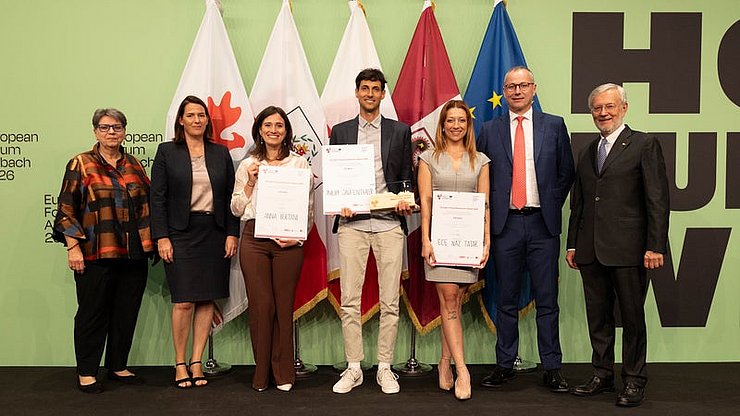
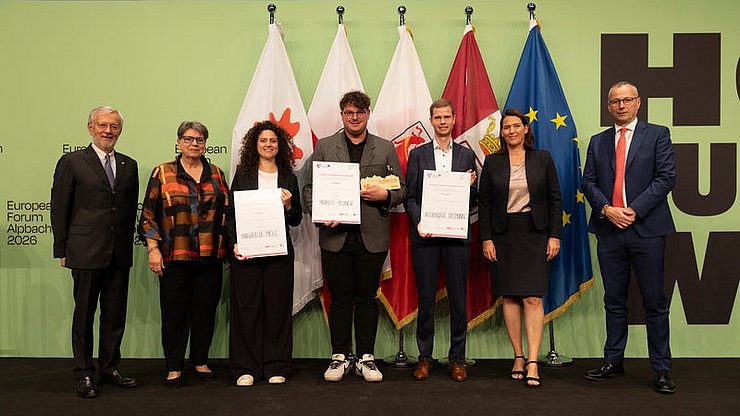
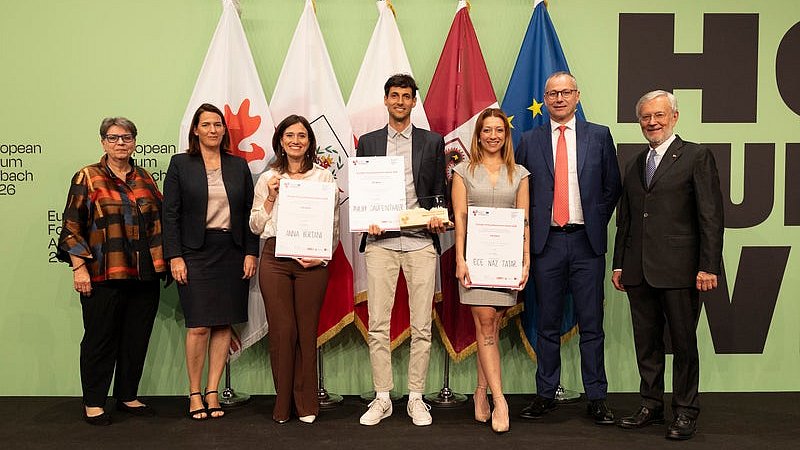
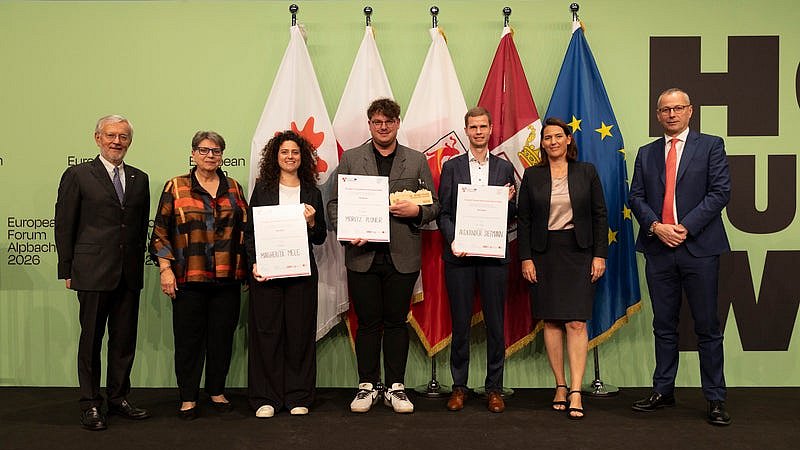
Anlässlich der Euregio-Days 2026 in Alpbach, die sich dem Thema „Starke Regionen. Starkes Europa. gemeinsam!" widmeten, konnten wiederum Nachwuchsforscher:innen unter 35 ihre Arbeiten einreichen, vorstellen und sich mit renommierten Wissenschaftler:innen und politischen Verantwortungsträger:innen austauschen.
2026 wurden erstmals zwei Euregio-Jungforscher:innenpreise vergeben
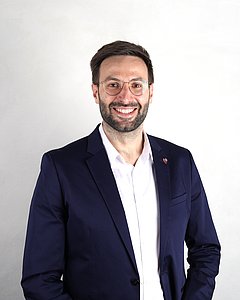
Die zwei besten Jungforscher:innen der Euregio sind Philipp Jaufenthaler von der Universität Innsbruck und Moritz Ploner von der Freien Universität Bozen.
Rekord mit 49 Einreichungen
Erstmals wurden beim Jungforscher:innenpreis Auszeichnungen in zwei Kategorien vergeben und zwar in den Kategorien I: "Wirtschaft, Sozialwissenschaften, Rechtswissenschaft, Bildungs- und Geisteswissenschaften" und II: "Technische Wissenschaften, Naturwissenschaften und Medizin".
Am Samstagnachmittag (29.08.2026) konnten je drei Finalistinnen und Finalisten pro Kategorie ihre Einreichung der JungforscherInnenpreis-Fachjury unter dem Vorsitz von Ulrike Tappeiner, Leiterin des Instituts für Alpine Umwelt von Eurac Research präsentieren.
Am Abend wurden dann alle von der Wirtschaftskammern Tirol sowie den Handelskammern von Bozen und Trient gestifteten Preise feierlich überreicht: Neben Präsidentin Barbara Thaler (Tirol) sowie den Präsidenten Michl Ebner (Bozen) und Andrea De Zordo (Trient) gratulierten auch der Euregio-Präsident, Tirols Landeshauptmann Anton Mattle, Südtirols Landeshauptmann Arno Kompatscher und der Trentiner Landtagspräsident Claudio Soini.
Die Platzierungen
Den Jungforscher:innenpreis in Kategorie I konnte sich Philipp Jaufenthaler von der Universität Innsbruck mit einer Arbeit zu Vermarktung des Familienunternehmens sichern. Der zweite Platz ging an Anna Bertani, der dritte an Ece Naz Tatar (beide von der Universität Trient).
In der Kategorie II gewann Moritz Ploner von der Freien Universität Bozen mit einer Arbeit zu tragbaren Schweißsensoren zur Gesundheitsüberwachung. Auf den Plätzen zwei und drei folgen Margherita Mele von der Universität Trient und Alexander Sietmann von der Universität Innsbruck.
Das Preisgeld für die Erstplatzierten beträgt 4.500 Euro pro Kategorie. Auf die Zweit- und Drittplatzierten warten 2.000 beziehungsweise 1.000 Euro. Insgesamt hatten sich 49 Nachwuchsforschende unter 35 Jahren beworben.
Jungforscher:innenpreis: Kurzbeschreibung Siegprojekte
Hier eine Kurzbeschreibung der Siegprojekte. Die Kurzbeschreibungen aller Finalprojekte des Jungforscher:innenpreises sind im Downloadbereich zu finden.
>> Euregio-Jungforscher:innenpreis – Kategorie "Wirtschaft, Sozialwissenschaften, Rechtswissenschaft, Bildungs- und Geisteswissenschaften":
Philipp Jaufenthaler, University of Innsbruck: Strengthening Regions in a Volatile World: Experimental Evidence on the Localness Effects of Family Firm Status
In einer zunehmend volatilen Welt ist lokale Identität ein entscheidender Faktor für Resilienz. Diese Studie untersucht das Branding von Familienunternehmen als strategisches Instrument zur Stärkung der Wettbewerbsfähigkeit der Euregio. Auf Basis eines interdisziplinären Ansatzes, der Erkenntnisse aus Konsumentenpsychologie und strategischem Management verbindet, analysieren fünf experimentelle Studien mit insgesamt 1.654 Teilnehmenden, wie der wahrgenommene Status als Familienunternehmen verschiedene Dimensionen von Regionalität beeinflusst: geografische Reichweite, lokale Identifikationskraft ("Local Iconness"), nationale Herkunft und inländische Produktion. Die Ergebnisse zeigen, dass der Status als Familienunternehmen die Kaufabsicht signifikant erhöht, wobei dieser Effekt vor allem durch die "Local Iconness" einer Marke getragen wird, also durch deren wahrgenommene kulturelle Verankerung. Für die Euregio, deren Wirtschaft maßgeblich von Familienunternehmen geprägt ist, bieten diese Erkenntnisse eine wirkungsvolle Grundlage, um lokale Stärken gezielt zu nutzen und gleichzeitig auf globalen Märkten wettbewerbsfähig zu bleiben. Damit leisten sie einen direkten Beitrag zum Aufbau resilienter und starker Regionen.
>> Euregio-JungforscherInnenpreis – Kategorie "Technische Wissenschaften, Naturwissenschaften und Medizin":
Moritz Ploner, Free University of Bozen-Bolzano: Wearable Sweat Cytokine Sensing for Decentralized Health Monitoring
Der Zugang zu diagnostischen Dienstleistungen bleibt insbesondere in abgelegenen Alpenregionen eine Herausforderung, da wiederholte Blutanalysen in herkömmlichen Laboren oft nur eingeschränkt möglich sind. In diesem Kontext bietet die tragbare biochemische Sensorik einen vielversprechenden Ansatz für eine dezentrale Gesundheitsüberwachung. Vor diesem Hintergrund entwickelt das Projekt eine tragbare Plattform zur nicht-invasiven Erkennung von Entzündungsbiomarkern im Schweiß, mit besonderem Fokus auf die Zytokine Interleukin-6 (IL-6) und Tumornekrosefaktor Alpha (TNF-α), zwei wichtige Indikatoren für Immunaktivität und chronische Entzündungen. Durch die Integration flexibler elektrochemischer Sensoren, mikrofluidischer Systeme und einer auf maschinellem Lernen basierenden Signalanalyse ermöglicht die Plattform eine sensitive und multiparametrische Überwachung in einem tragbaren Format. Diese Technologie könnte die Entwicklung diagnostischer Systeme für die Gesundheitsüberwachung in Echtzeit unterstützen und künftig Anwendungen in der Telemedizin, der früheren Erkennung von Krankheiten, einem breiteren Zugang zu Diagnostik sowie resilienteren Gesundheitssystemen ermöglichen.
Download
Abstracts Euregio-Jungforscher:innenpreis Finalprojekte
Kontakt

Termine
Aktuelles aus der Euregio und Brüssel
Kooperationen


Unsere Regionen